

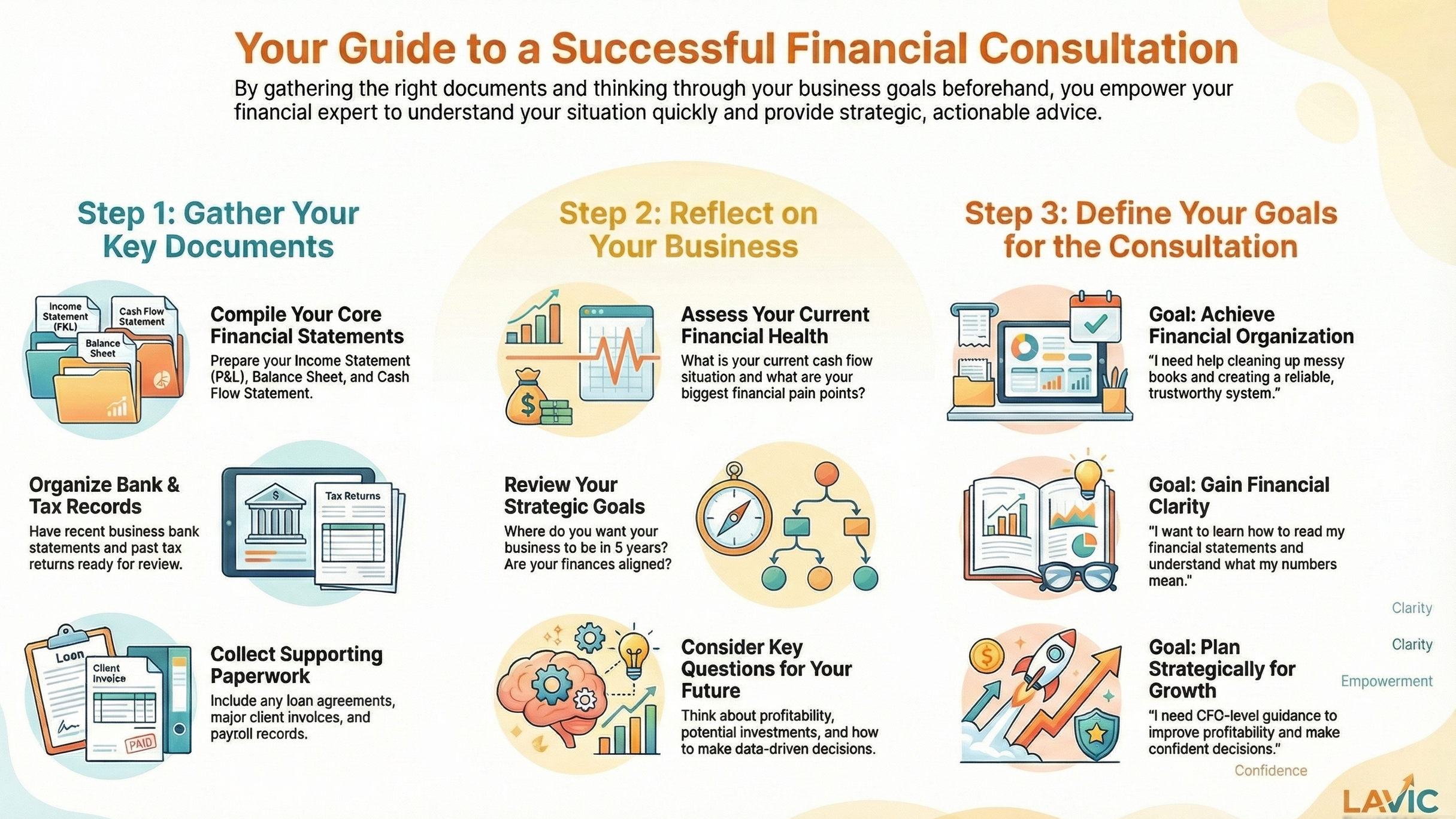
Your Guide to a Successful Financial Consultation
How to prepare so your consultation is clear, focused, and genuinely valuable
Step 1: Gather the Right Information
You do not need every document to move forward — but the more you bring, the more specific and helpful your consultation can be.
Helpful Documents (If Available)
Profit & Loss Statement (P&L)
Balance Sheet
Cash Flow Statement
Business bank and credit card statements
Tax returns (most recent year)
Loan or financing agreements
Payroll reports
Major client invoices or contracts
Why this matters:
These documents allow your advisor to understand how your business actually functions financially — not just how it feels.
If this isn’t clear:
The consultation stays high-level and general instead of tailored and actionable.
Step 2: Reflect Honestly on Your Business
Before the consultation, take a few minutes to reflect on where you truly are — not where you hope you are.
Ask Yourself:
Do I feel calm or stressed about my cash flow?
Do I know whether I’m profitable?
Do I trust my financial reports?
Where do I feel confused, stuck, or uncertain?
Why this matters:
Your answers guide the conversation. Without reflection, the consultation risks addressing symptoms instead of root causes.
Step 3: Clarify What You Want Help With
Clear intentions create clear outcomes.
Examples of Useful Goals:
“I need help cleaning up my books so I can trust my numbers.”
“I want to understand my financial statements so I can make better decisions.”
“I want to improve profitability and plan for sustainable growth.”
“I want to feel less anxious about my finances.”
“I’m preparing for a loan, investor, or expansion.”
Why this matters:
When you name your goals, your advisor can guide you instead of guess.
Step 4: Come with Questions
Your consultation is not a presentation — it’s a conversation.
Bring any questions that feel important, even if they feel basic:
“Why does my bank balance not match my profit?”
“Am I charging enough?”
“Can I afford to hire someone?”
“Where is my money actually going?”
There are no bad questions — only unasked ones.
What to Expect from the Consultation
A strong consultation will:
Review your current financial situation
Identify risks, gaps, and opportunities
Clarify what matters most right now
Recommend next steps
It is not a test. It is a collaborative process.
Final Thought
The purpose of preparation is not to impress — it’s to empower.
When you show up prepared:
The conversation becomes more specific
The guidance becomes more relevant
The outcome becomes more valuable
And you leave with clarity instead of confusion.
In Summary:
Prepare your documents.
Reflect honestly.
Clarify your goals.
Bring your questions.
That’s how you turn a consultation into a turning point.
A financial consultation is not about being judged — it’s about gaining clarity.
This guide will help you prepare thoughtfully so your consultation can focus on what matters most: understanding your current financial reality, identifying opportunities, and determining the right next steps for your business.
It’s not about being perfect. It’s about being prepared.
"Being an e-commerce entrepreneur isn't easy, and Adri gave my products the design direction they needed to become bestsellers."
— Sofia Pazari